What's this about?

Rotable was transforming their hospital training managment platform, driven by a new optimisation algorithm, researched in collaboration with the Fraunhofer Institute. I directed the strategy and concept for the next product iteration. Our partnership gradually expanded into further initiatives, including a dedicated app.

Challenges

Stack overflow

Rotable's product was extraordinarily complex. I became their escalation point for the hardest problems where no solution was in sight.

Raw dogging it

Resources were extremely scarce, but Rotable had a strong design system and a UI-savvy founder. There would be no time for polish.

Crowd pleaser

Rotable served two distinct audiences: Large hospitals with complex processes, and smaller ones with direct decisionmaking.

Strategy

What's our move?

Rotable had a powerful new algorithm, but no shared vision how to shape it into a product. The first step was defining a clear plan.

🕵️ explore further

No more talky

With strategy and product vision aligned, someone had to turn it into an implementation ready concept that fit the available resources.

👩‍🚀 explore further

Broccoli, solved.

The transformation unlocked new opportunities. Now the focus shifted to making the product's complexity digestible for it's users.

🧑‍🔬 explore further

What's our move?

Three body problem

Rotables founding team consists of three sharp individuals, each having their own unique perspective... and strong opinion. I aligned those smart voices into one common direction within a workshop.

Manifest it

I consolidated all insights into a journey map, structuring each audience's activities, needs and pain points into a coherent product vision. This allowed us to narrow down the MVP to three out of six total stages.

No more talky

Where do we start?

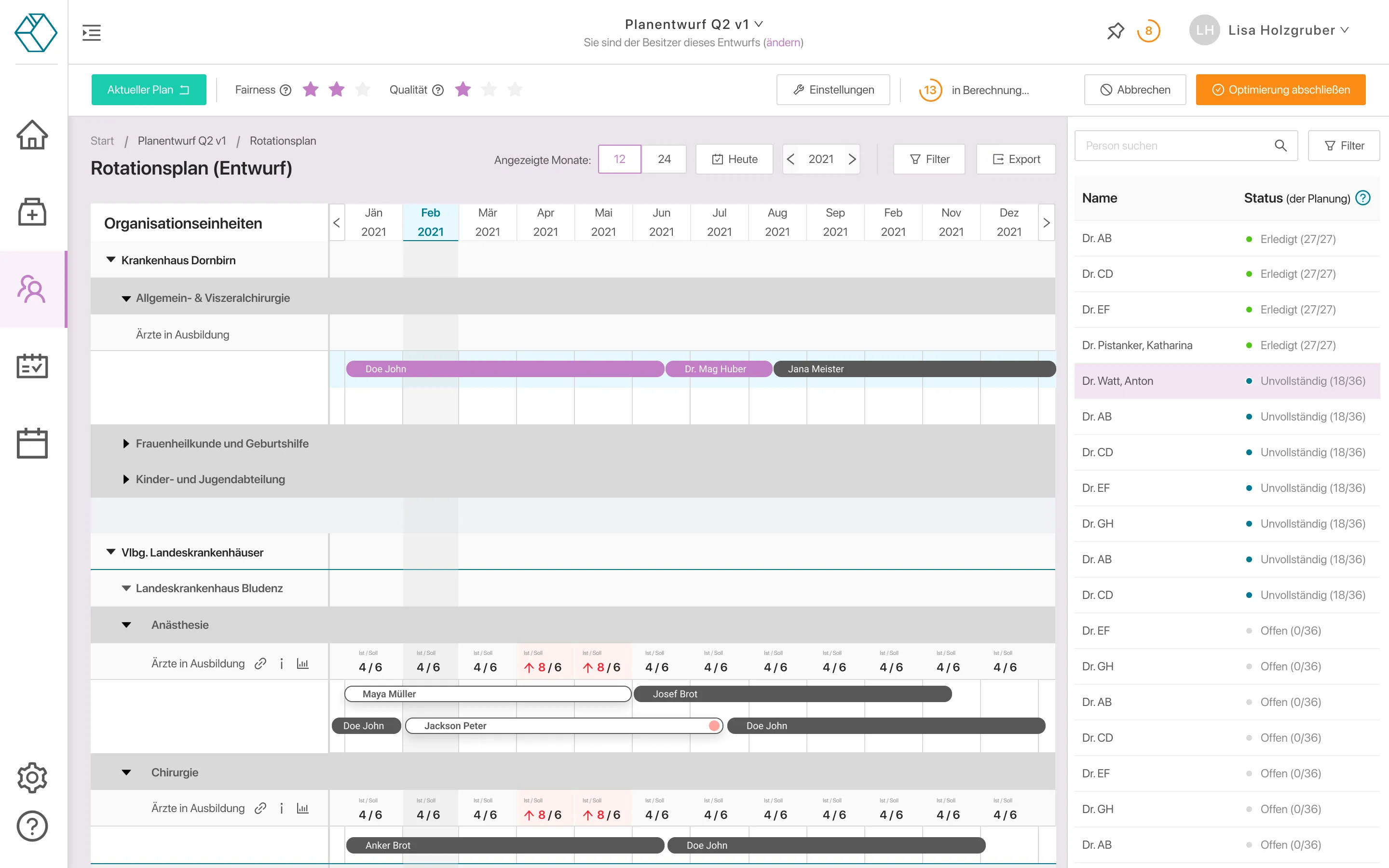
The product gained a new planning mode to explore alternative schedules without impacting live operations. Working under tight time constraints, I explored ways to fit it into the existing product structure using screenshots paired with high-contrast wireframes

Is this real life?

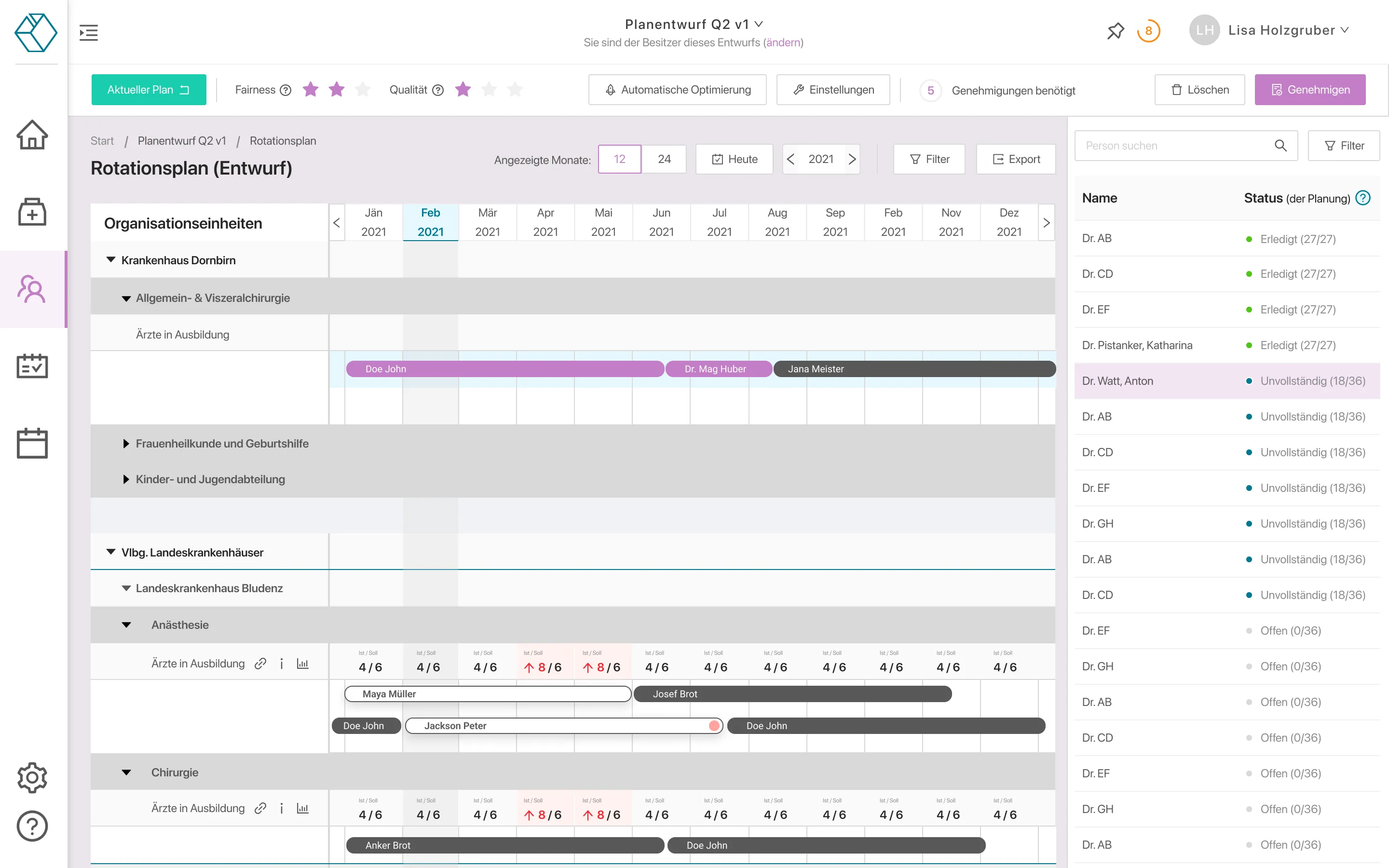
The next challenge was making the currently active mode unmistakable, to prevent capture slips. To move fast, I designed UI screens using Rotable's components, leveraging clear differences in color and structure to signal the active mode.

Are we there yet?

Users could use the optimisation algorithm in this mode. It would run asynchronously, only giving a rate of improvement as feedback. The UI let users decide when the draft was good enough. Computations could be pinned to track progress while continuing work elsewhere.

Who's in charge?

In line with the workshop, stakeholder management became a key part of the drafting system. It included an approval chain with ownership and permission controls, supported by different views for each role.

Broccoli, solved.

Diving deeper

Happy with the results, we started improving manual adjustments of plans. The challenge was keeping it intuitive, while supporting vastly different curriculums, often with complex dependencies defined in regulatory documents.

Cleaning up

To make the curriculums easier to navigate, I restructured them around dependencies, ordering sections by how they rely on each other. The first section block would exclusively contain sections without dependencies.

SECTION 2 SECTION 3 SECTION 5 SECTION 4 SECTION 6 SECTION 1 SECTION 7 INDEPENDENT NEW SECTION 1 NEW SECTION 2 NEW SECTION 3 NEW SECTION 4

Maximum density

Built for power users, I optimized for overview at all times and filtering by section. Hospital management needs to track student preferences and station availability while maximizing throughput, resulting in dense wireframes.

Interconnected

The new pane adds an orthogonal navigation layer feeding back into the timeline to its left. It narrows down date ranges, jumps between stations, and highlights timeline segments, turning cumbersome navigation into something convenient.

The rabbit hole

But it didn't stop there. The pane adds advanced functionality, including conflict overview and resolution, as well as planning around unresolved dependencies. It's also expandable to provide more space for this added complexity.

The result

Two sides

What started out as an alignment workshop developed into a deep partnership, with me constantly supporting the amazing people 🫶 behind Rotable on their journey.

Of one coin

This special relationship of delivering maximum impact is reflected in the app, which was delivered as wireframes by me and directly translated into the design system by the team.

Hey! I'm the UI-savvy cofounder of Rotable! 😁 I want to highlight Michals exceptional ability to quickly understand complex issues and translate them into user friendly requirements! I highly recommend Michal for any team seeking to enhance their UX!

Yannick Dues

Jealous? 😐

No need to be! I got all the resources to make your project just as awesome and beyond! How about we have a short talk and exchange about your requirements?

Let's talk!

Ready to
level up?

Maturity Check

9 points required to pass

you shall pass! NOT

How can design boost your revenue? (7 pts)

0 pts

It can stop pesky customer support requests

It can save the lifes of my customers

It can make me avoid compliance violations

It can facilitate buy-in of political stakeholders

It can reduce operational costs

It can reduce the development effort

It can boost retention and customer loyalty

It can improve my conversion during onboarding

It can be the USP of my services

It can attract better talent into my company

It can maximise the turnaround of key journeys

It can exploit addictive patterns of humans

It can change my users personal preferences

It can help promise features that don't yet exist

What makes great designs stand out? (4 pts)

0 pts

Can an Ai create great designs? (4 pts)

0 pts